Few dishes inspire as much loyalty, or as many arguments, as biryani. Every region claims the best version, every family guards its own recipe, and everyone has an opinion. Here is a clear, honest guide to what biryani actually is, and how to spot a great one.
So what is biryani, really?
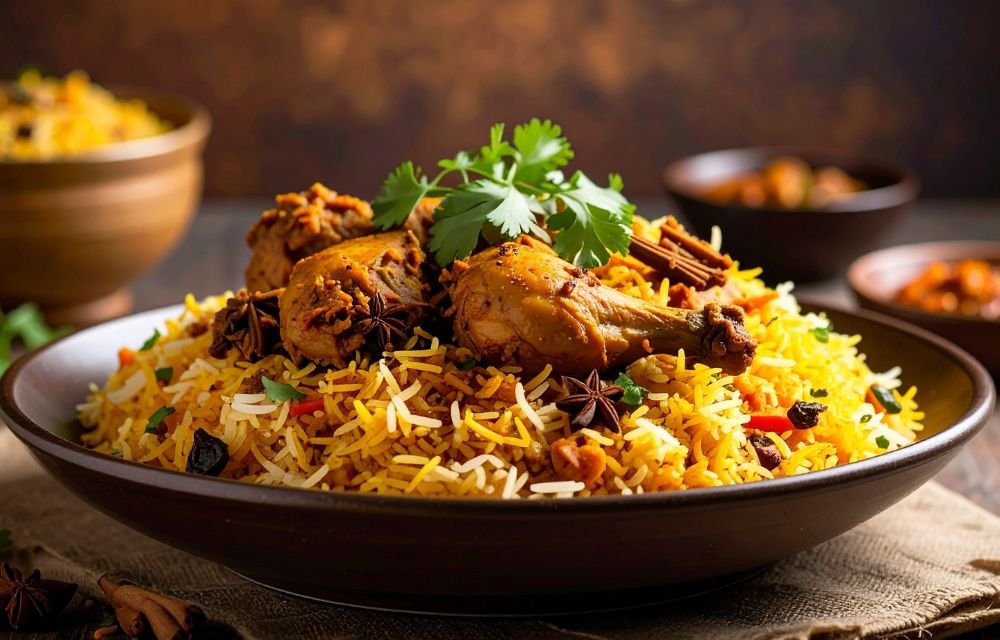
At its heart, biryani is a layered dish of long-grain basmati rice and spiced meat or vegetables, slow-cooked together so the rice absorbs every bit of flavour. What makes it special is the method: the rice and the marinated filling are par-cooked separately, then layered and sealed to finish together. It is not a rice dish with curry poured over it, and that distinction is everything.
Biryani vs. pulao: know the difference
People often confuse the two, but they are built differently. In a pulao, rice and ingredients cook together in one pot from the start. In a biryani, the components are cooked separately and then layered, which gives you distinct, fluffy grains carrying deep, concentrated flavour. If your grains are mushy and uniform, you are probably eating a pulao.
The magic word: dum
Dum is the slow-steaming technique that defines proper biryani. The pot is sealed, traditionally with a ring of dough around the lid, and cooked over a low flame. The trapped steam gently finishes the rice and lets the spices, meat and saffron mingle without anything drying out or overcooking.
Real dum biryani is opened at the table. That first rush of saffron-scented steam is half the experience.
A quick tour of regional styles
- Hyderabadi — the famous one. Raw marinated meat is layered with par-boiled rice and cooked together on dum. Fiery, fragrant and rich.
- Lucknowi (Awadhi) — gentler and more aromatic. The meat is cooked first in a delicate gravy (the pakki method), giving a softer, perfumed result.
- Kolkata — lighter on spice, distinctive for the addition of soft potato and sometimes egg, a legacy of Lucknow's royal kitchens moving east.
- Tahari / vegetable — the vegetarian tradition, where seasonal vegetables and paneer carry the same layered, dum-cooked treatment.
How to spot a great biryani
Whatever the region, the markers of quality are the same. Look for long, separate grains rather than a sticky clump. The rice should be subtly two-toned, where saffron and spice have stained some grains while others stay pale. The aroma should hit you before the first bite, and the meat should be tender enough to pull apart with a fork. A good biryani needs little more than a side of raita and a wedge of lemon.
Where to find authentic biryani in Brampton
At Musafir Kitchen & Bar, our biryani is cooked the traditional dum way, sealed and slow-steamed so every grain carries the flavour of saffron, whole spices and slow-marinated meat. We serve it with cooling raita, and because our kitchen stays open late, it is just as good at midnight as it is at dinner. Whether you take it as part of a meal or order it for an event, this is biryani done with patience, not shortcuts.